ServicesVehicle Restraints
Vehicle Restraints in Shenandoah
When a trailer pulls away from the dock in the middle of a load, someone can get hurt. We repair, adjust and install vehicle restraints that hold trailers firmly in place, and we give you an arrival window you can build your receiving schedule around.
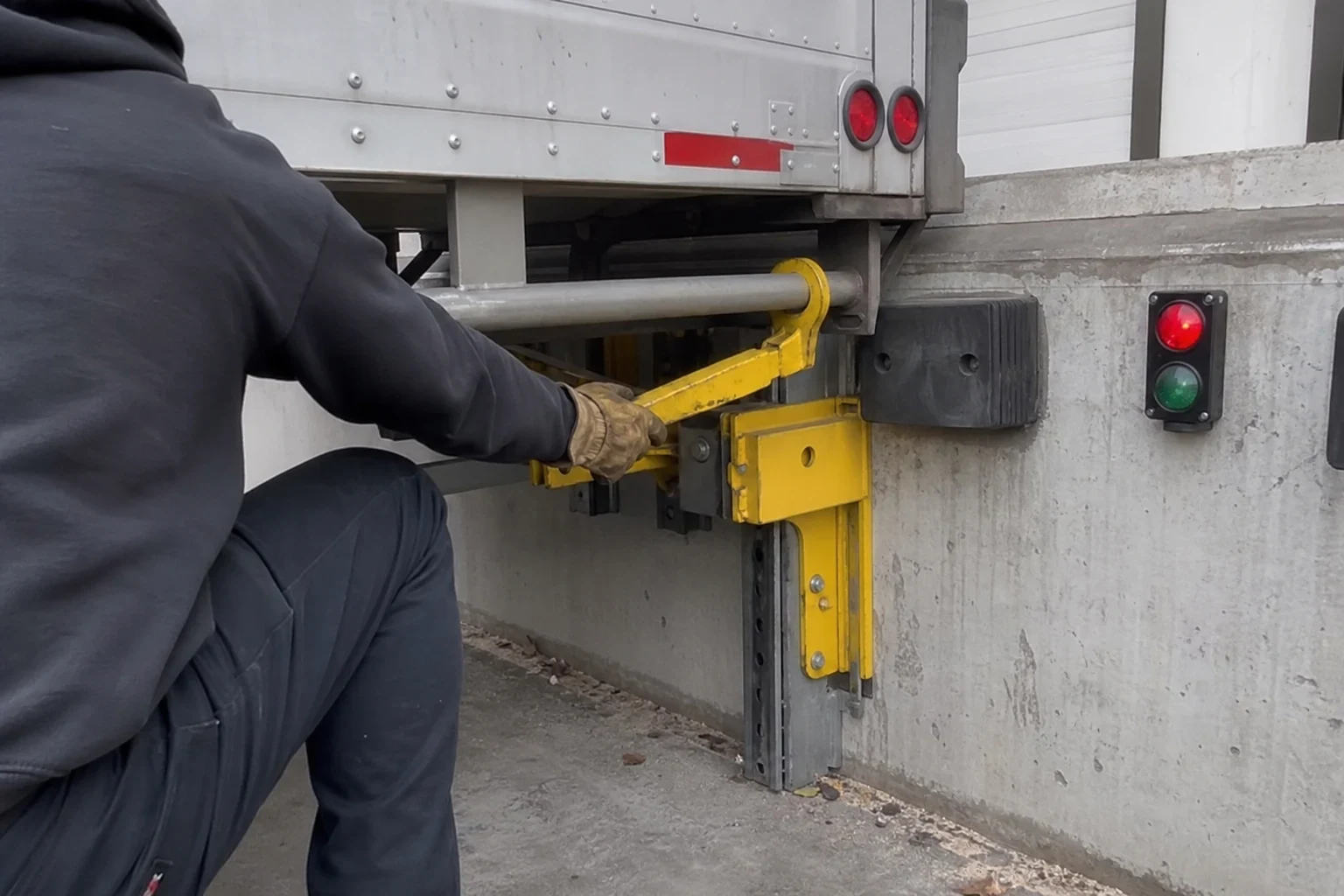
What a vehicle restraint does for your dock
Your vehicle restraint is the piece of dock equipment that stops a trailer from drifting while forklifts drive in and out of it. Most units raise a powered hook that catches the trailer's rear impact guard, often called the ICC bar. Other designs chock the rear wheels, which works better for trailers with bent, missing or oddly placed bars. Both types are paired with red and green lights on each side of the door, so the driver outside and your crew inside can see whether the trailer is secured.
We work on restraints that are slow, stuck, out of adjustment or knocked out of line by a trailer. We also install new units when an old one is past saving or a door never had one. Because the restraint often ties into your dock leveler and overhead door controls, we check how the whole door position works together, not just the hook.
We plan the work around your receiving schedule. You get a realistic arrival window, and if a part is delayed or the job runs long, we tell you before it affects your next truck.
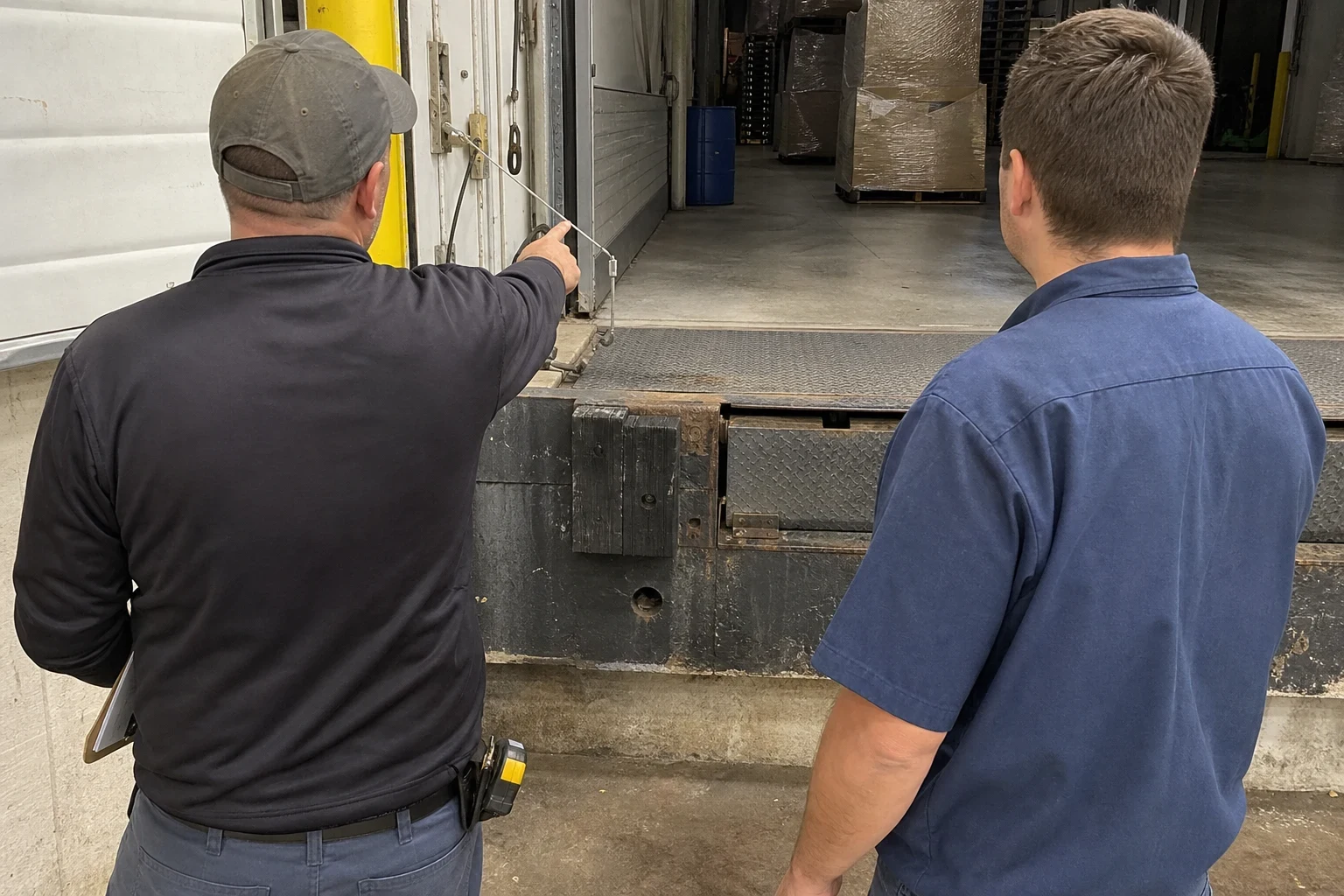
What our restraint work covers
- 01
Hook and carriage inspection
We check the hook for wear and bending, then look at the carriage, track and rollers it rides on. Road salt and grit build up in the track over a Pennsylvania winter and cause sticking, so we clean it as part of the visit.
- 02
Drive and hydraulic system
On electric units we test the motor, gearbox and limit switches. On hydraulic units we look for leaks, low fluid and worn hoses that make the hook drift down under load.
- 03
Signal lights and controls
We confirm the inside and outside light sets change at the right moment and that the control panel, alarms and override work as intended. A green light that shows before the hook is truly engaged is a safety problem, and we treat it like one.
- 04
Interlocks with levelers and doors
Some docks are wired so the leveler stays locked out until the restraint has a firm grip on the trailer. We walk through that sequence step by step to confirm it behaves, and we can add interlocks during an upgrade.
- 05
New restraint installation
When a unit is beyond repair, we help you pick a hook-style or wheel-based restraint that suits the trailers you actually receive, then mount, wire and test it. If you are still comparing models, our Loading Dock Equipment Sales page explains how we help with that choice.
- 06
A written report
You get a plain list of what we found, what we fixed and anything we recommend you plan for later, so nothing comes as a surprise at budget time.
Questions about Vehicle Restraints?
Call(570) 533-9838Signs your vehicle restraint needs attention
The hook does not fully engage
If the hook stops short of the bar or drops when a forklift drives onto the trailer, the trailer is not truly held.
Lights that disagree
Green outside while red inside, lights stuck on one color, or lights that flicker between states all mean the sensors or wiring need checking.
Your crew uses the override every day
An override is meant for the odd trailer with a damaged bar. Regular use usually points to an adjustment problem we can fix.
Slow or noisy operation
Grinding, groaning or a hook that takes longer than it used to suggests a worn motor, low hydraulic fluid or a dirty track.
Visible impact damage
A trailer backing in hard can bend the carriage or knock the unit out of plumb. Even if it still moves, it may not hold.
What happens on a restraint service call
- 1
Pick a window by phone
We ask which doors have trouble, what the restraint is doing and when your trucks come in. Then we set an arrival window that stays clear of your heaviest receiving hours whenever we can.
- 2
Lockout first
Our technician checks in, confirms the door and shuts off and locks out power before working on the unit. We are OSHA 30 certified and mark off the area so forklift drivers keep their distance.
- 3
Find the cause, then decide
We run the restraint through complete cycles, track down the problem and tell you whether it needs a repair or a replacement. Nothing more happens until you approve it.
- 4
Fix and prove it on a trailer
Adjustments and common parts are usually done that same visit. Where we can, we test with an actual trailer backed in so you watch the hook catch and the lights switch.
- 5
Word from us if timing shifts
When a part needs ordering, you get the expected arrival date and a booked return visit, instead of a door sitting down with no news.
What sets the price of restraint service
We price restraint work from what we see at your dock. You hear what is driving the cost before anything starts, and the repair is written down so you can decide with all the details in front of you.
- Which restraint you have
- Hook-style, wheel-based, electric and hydraulic restraints each use their own parts and need different service time.
- How much is damaged
- Cleaning a track or tightening a sensor goes quickly. A bent carriage or dead motor takes more parts and more labor.
- Getting the parts
- Older or discontinued models can have parts that take a while to find, which sometimes means a second trip.
- Interlocks and wiring
- Connecting a restraint to your leveler and door controls, or fixing damaged wiring between them, adds to the job.
- How many doors
- Covering several restraints in one trip usually beats separate visits, which is why many facilities combine this work with Loading Dock Preventative Maintenance.
Vehicle restraint questions
Can you work on a restraint while we keep the other doors running?
Yes. We lock out only the door we are working on and mark off the area. Your other doors stay in use, and we coordinate with your dock lead so trucks are routed around us.
What if our trailers have damaged or missing ICC bars?
That is a common problem with hook-style restraints. We can look at the trailers you see most often and talk through whether a wheel-based restraint would hold them better at that door.
Is your repair work covered?
Yes. Our restraint repairs carry a 1-year labor warranty. Should a repair we made start giving you trouble during that first year, let us know and we will schedule a return visit to check it.
How long does a typical repair take?
Adjustments, sensor fixes and track cleaning usually fit in a single visit of a few hours. Motor, hydraulic or carriage replacement can take longer, especially if parts need to be ordered, and we give you a realistic timeline before we start.
Do you service restraints in towns around Shenandoah?
We do. We regularly work at facilities in Frackville, Pottsville, Mahanoy City and the surrounding area, and we plan arrival windows with the drive time already built in.
Put your trailers back on a secure hold
Let us know which doors are acting up and what your truck schedule looks like. We will plan a visit around it and call ahead if anything shifts.