ServicesPreventative Maintenance
Loading Dock Preventative Maintenance in Shenandoah
We inspect, adjust and lubricate your dock levelers, overhead doors, vehicle restraints and seals on a schedule you set, so small wear gets fixed before it stops a trailer. You get an arrival window you can plan receiving around, and a call from us if anything changes.
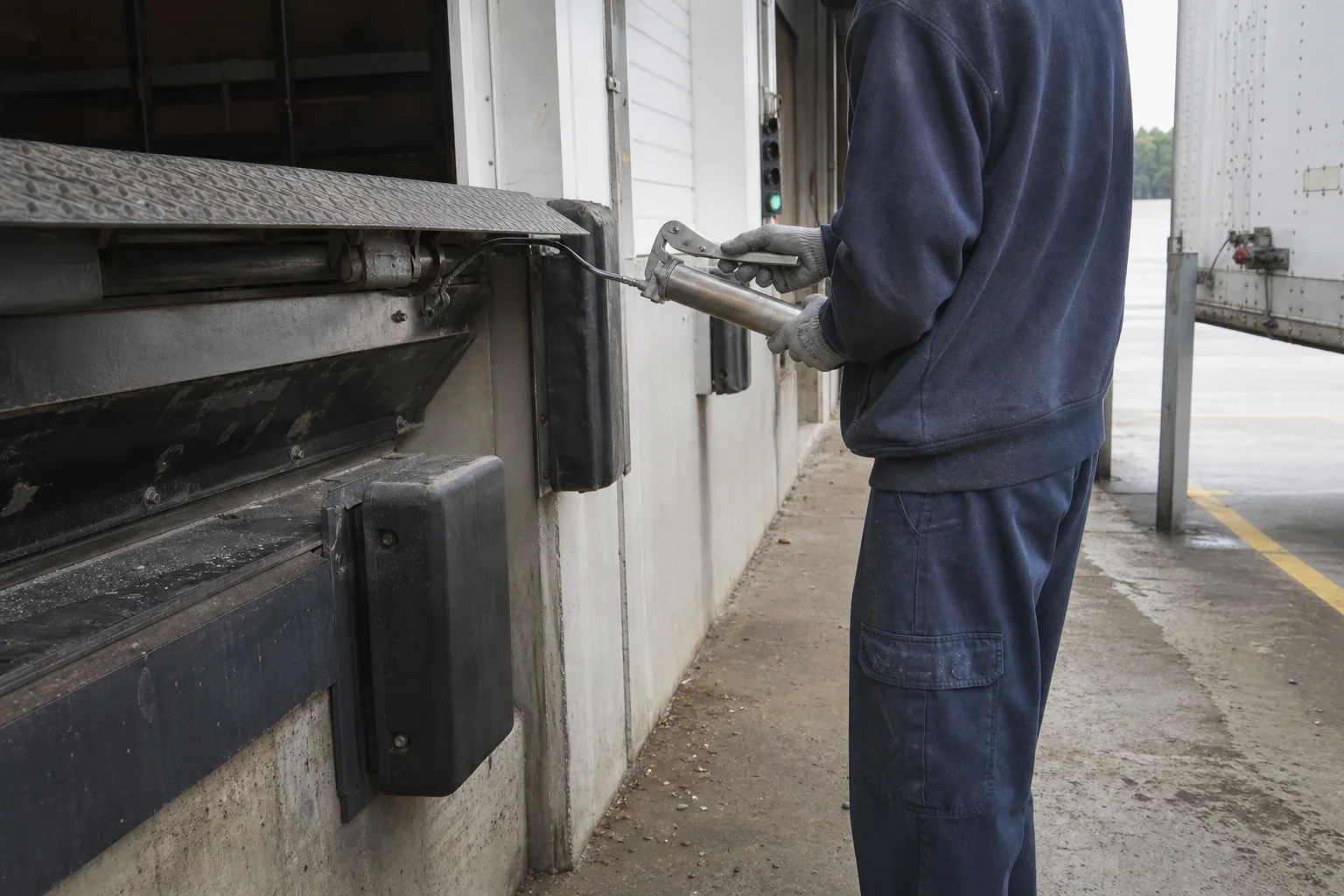
Planned upkeep that keeps your docks working
Most dock breakdowns start small. A leveler lip hinge goes dry, a hydraulic cylinder weeps a little fluid, a door spring loses tension, a restraint hook gets sluggish. None of it stops work on day one, but each one can turn into a dead dock position on your busiest morning. Preventative maintenance catches that wear while it is still a quick adjustment.
We set up visits quarterly, twice a year or on whatever interval fits your traffic, and we book them around your shipping and receiving schedule. Before each visit you get an arrival window. If a job at another facility runs long or weather pushes us back, we call you ahead of time so you can shift doors instead of waiting on us.
Our technicians are OSHA 30 certified, and every unit we open up is locked out and tagged before we put hands on it.
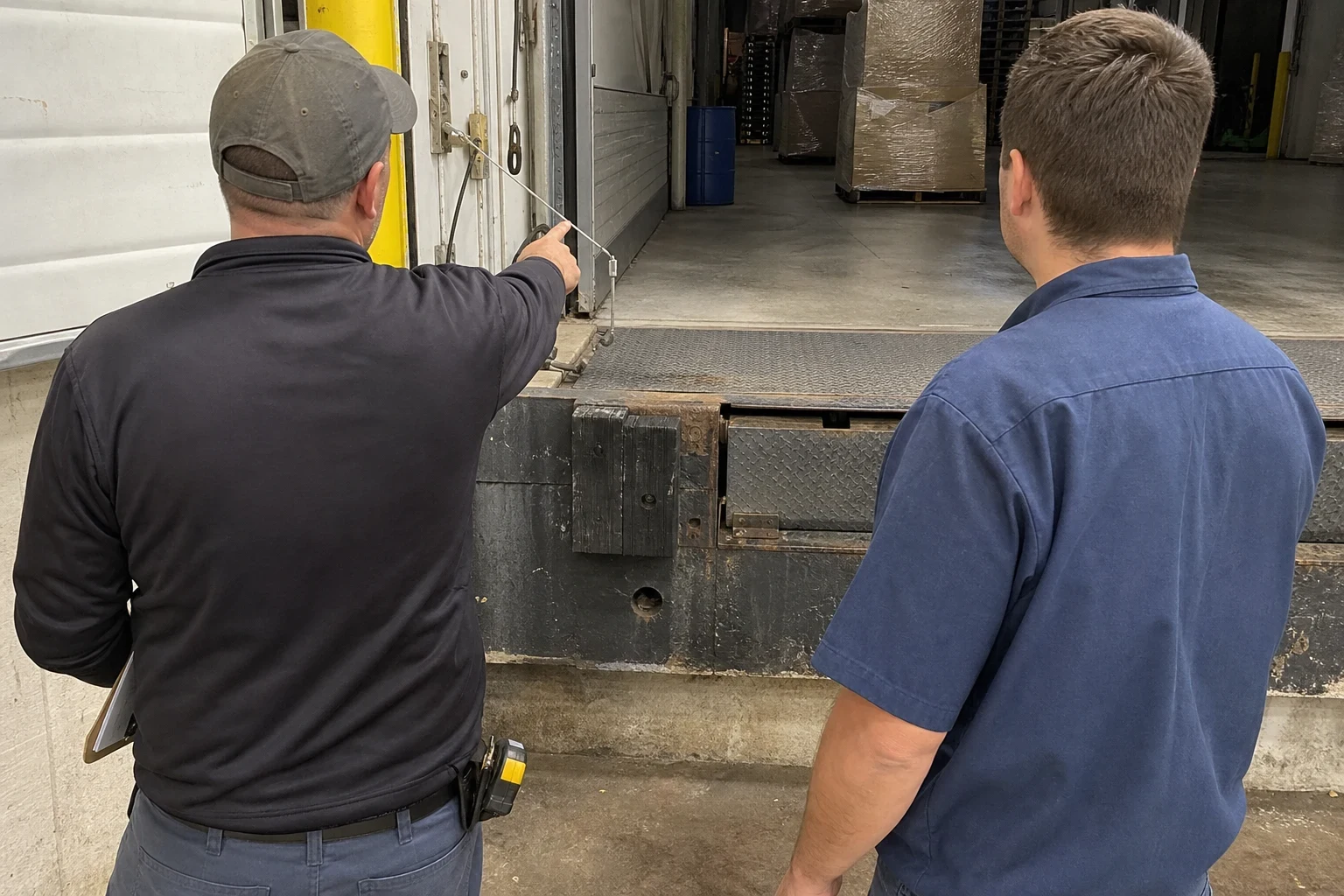
What each maintenance visit covers
- 01
Dock leveler inspection
We check hinges, lip operation, deck plates, toe guards and the lift system. Hydraulic units get a fluid level check and a close look at hoses and cylinders for leaks. Mechanical levelers get spring tension and hold-down adjustments.
- 02
Overhead door service
Springs, cables, rollers, tracks and hinges are inspected and lubricated, and we test balance and the safety reversing function on powered doors. Loose track bolts and frayed cables go on the report before they become a door off its track.
- 03
Vehicle restraint check
We cycle each restraint, watch it engage the trailer's rear impact guard, and confirm the inside and outside signal lights change the way your drivers and forklift operators expect.
- 04
Seals, shelters and bumpers
Torn seal pads and worn bumpers let weather in and let trailers strike the building. We note what needs replacing and how soon, so you can budget for it.
- 05
Written report with photos
After the visit you get a list of every unit by door number: what we found, what we fixed on the spot and what still needs attention, with photos. Nothing is labeled urgent unless it affects safety.
Questions about Preventative Maintenance?
Call(570) 533-9838Signs your docks are due for maintenance
Leveler hesitates or drops hard
If the deck rises slowly, the lip won't fully extend, or the leveler comes down with a bang, the hydraulics or springs are out of adjustment. That only gets worse with use.
Doors that grind, drift or reverse
Noisy rollers, a door that creeps down when it should stay open, or one that reverses for no clear reason all point to worn parts or a balance problem.
Restraint lights that don't match
When the signal lights disagree with what the restraint is actually doing, drivers and operators stop trusting them. That is a safety issue worth fixing promptly.
Daylight around a docked trailer
Gaps around the trailer mean worn seals or shelter curtains. Through a cold Pennsylvania winter that lets out heat and lets in slush, road salt and pests.
No record of the last service
If nobody at your facility can say when the docks were last looked at, that is reason enough to start. A baseline inspection shows where each unit stands.
How a maintenance visit runs
- 1
Set the schedule by phone
On the call, we ask for a rough count of your dock positions, the mix of levelers, doors and restraints you run, and which hours bring in the most trailers. From there we choose a visit day and an interval that stay out of the way of your receiving.
- 2
Arrival window and a heads-up
You get a window for our arrival ahead of time, and we confirm it the day before. If something changes on our end, you hear from us before the window starts, not after it has passed.
- 3
Door-by-door service
We check in with your dock lead, then work one or two positions at a time so the rest of the dock stays open. Each unit is locked out, inspected, adjusted, lubricated and tested before we hand it back.
- 4
Walkthrough and next steps
Before we leave, we go over what we found. Small fixes are handled during the visit. Larger repairs are quoted separately and scheduled for when they cause you the least downtime.
What affects the cost of a maintenance plan
Your price depends mostly on how much equipment we service and how often we come out. We go over it with you by phone and put the scope in writing before the first visit, so you know what a visit includes and what would count as extra. Any repair beyond that scope is quoted before we do it.
- Number of dock positions
- A four-door grocery receiving area and a forty-door distribution center are very different jobs. Each position adds inspection and testing time.
- Type of equipment
- Hydraulic levelers, mechanical levelers, high speed doors and vehicle restraints each take different time and parts. A dock with a restraint at every door takes longer per position.
- Visit frequency
- High-traffic warehouses often do best with quarterly visits, while a store taking a few trucks a week may be fine twice a year. More frequent visits usually mean fewer repairs between them.
- Age and condition of the units
- The first visit on older or long-neglected equipment takes longer, since there is more to adjust and more to document.
- Timing of the visit
- Working off-hours or around tight shipping windows can affect scheduling and cost. We tell you up front if it does.
Preventative maintenance questions
How often should loading dock equipment be serviced?
For most facilities, every three to six months. It depends on how many trailers you turn each day and how hard the equipment works. Busy distribution centers lean toward quarterly. We suggest an interval after the first inspection and adjust it as we learn your docks.
Do we have to shut down the dock during the visit?
No. We work a door or two at a time and coordinate with your dock lead on which positions to take first. Most facilities keep receiving through the whole visit.
Is your work covered by a warranty?
Yes. Labor on the repairs we make is covered by our 1-year labor warranty. We explain what that covers when we review the visit with you.
What happens if you find something that needs a bigger repair?
We document it with photos, tell you plainly whether it is a safety issue or can wait, and quote it separately. You decide when it gets done. If a unit is unsafe to use, we tag it out and tell you before we leave.
Will the reports help with our safety program?
A written record of inspections and repairs is useful when your safety team reviews dock equipment. You get that record, organized by door number, after every visit. We flag anything that looks unsafe so it can be handled before it causes an injury.
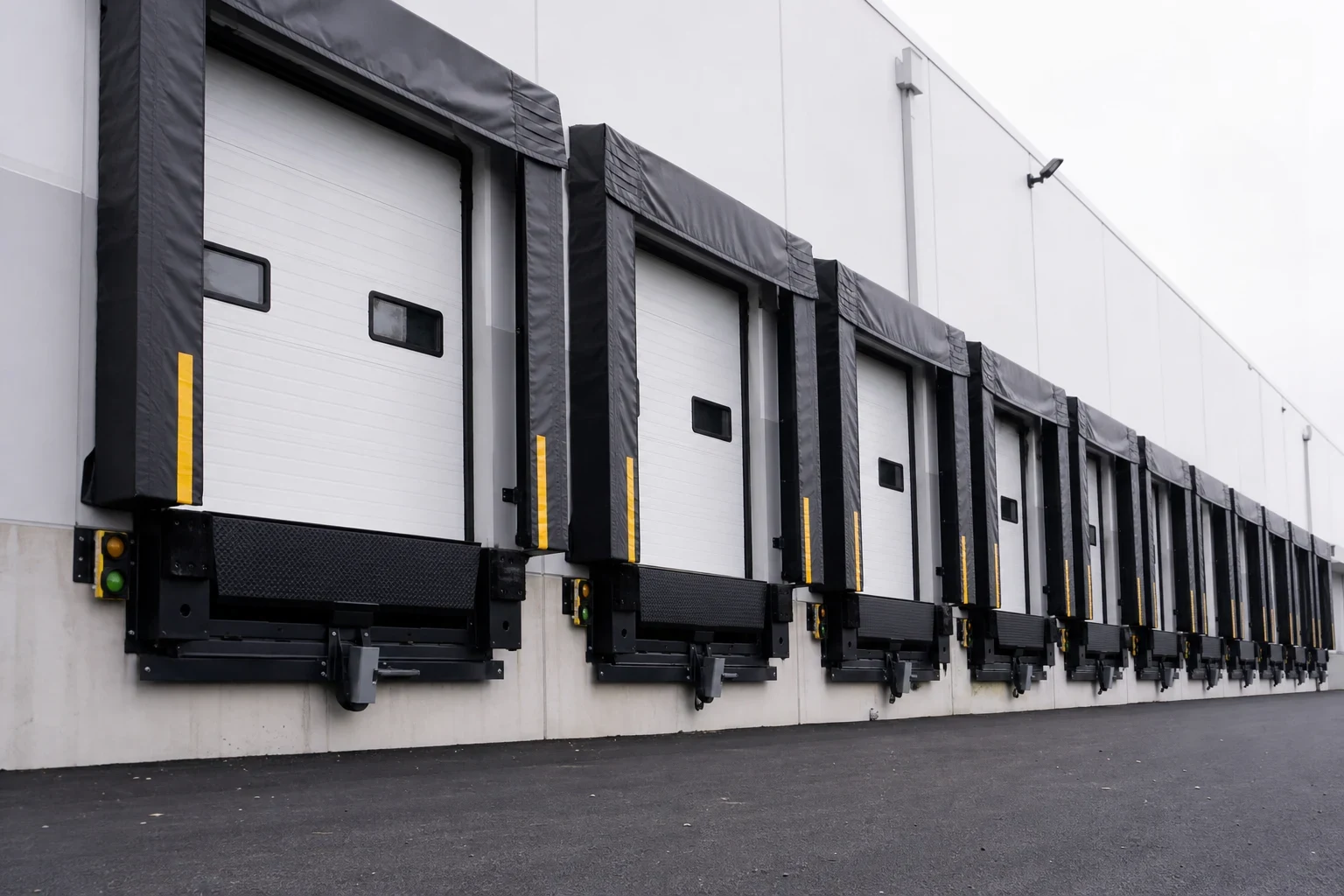
Put your docks on a schedule
Give us a quick picture of your dock positions and your truck traffic. We will suggest a maintenance interval and a first visit date that fits your week.